Thinking about buying a small multifamily in Queens Village so the rent helps cover your mortgage? You’re not alone. This corner of Southeast Queens has many legal 2-family homes and some 3- and 4-unit properties, which makes it a popular spot for house hackers and small investors. In this guide, you’ll learn what prices and rents look like right now, the rules that affect your returns, how loans work for 2-4 unit homes, and a simple way to underwrite cash flow so you can make confident offers. Let’s dive in.
Queens Village market snapshot
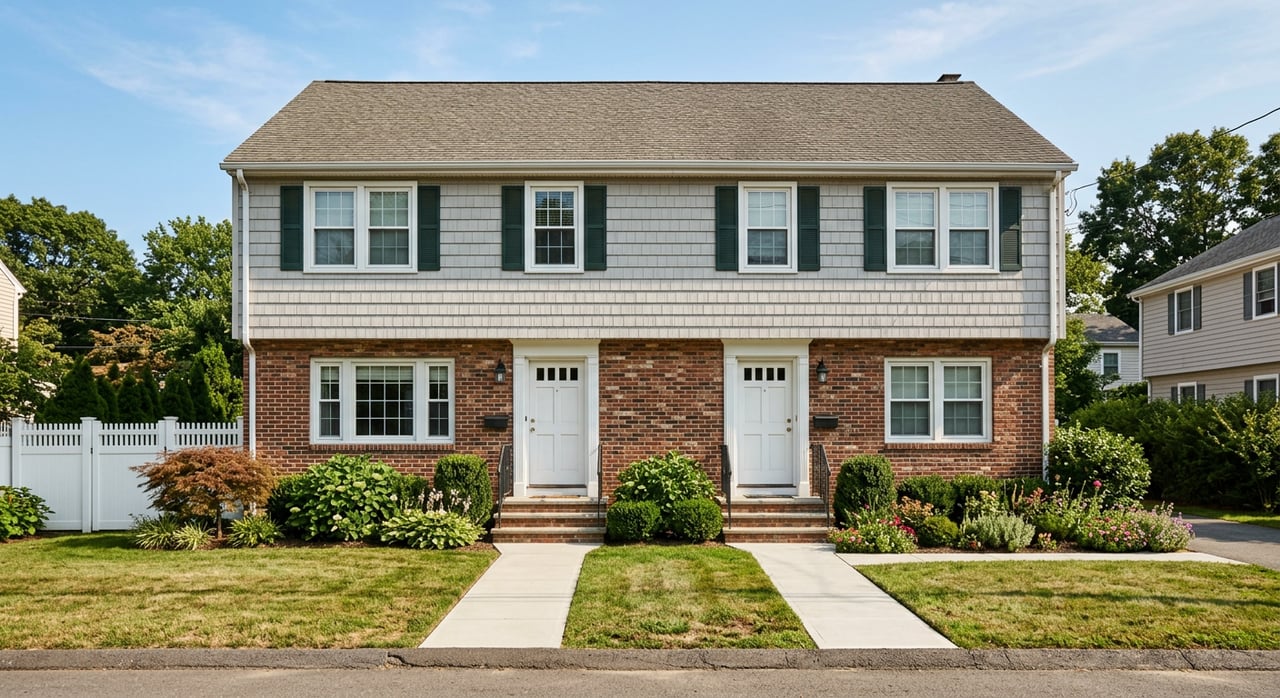
Queens Village sits within NYC’s Queens Community District 13, a mostly residential area with a strong base of owner-occupants and a middle-income profile compared with more central city neighborhoods. For a quick community overview, review the district’s demographics and housing mix on the Census Reporter profile for Community District 13. You’ll see a lot of detached and semi-detached 1-3 family homes and many legal 2-family houses built in the mid-20th century. (Community District 13 profile)
On pricing, recent 2-family sales and listings in Queens Village often land from the high $800,000s into the low $1.3 million range, depending on lot size, condition, and parking. For example, some recent activity includes a reported sale near $905,000 on Whitehall Terrace and another at $1,299,000 on Monterey Street. Use active and sold comps close to your target block to fine-tune your price view. (Recent Monterey Street comp)
Rents and income assumptions
Asking rents in Queens Village trend in the mid to high $2,000s across unit types. Smaller 1- and 2-bedroom units commonly list from roughly $1,600 to $3,000 per month, while larger 3-bedroom units can achieve more. Your actual rent depends on unit size, layout, renovation level, and parking. Start with neighborhood rent data, then pull very recent nearby listings that match your unit mix. (Queens Village rent snapshot)
Practical takeaway: at current sale prices, a typical renovated duplex often pencils with per-unit rents in the $2,000 to $3,000 range, but you should underwrite with property-specific comps to avoid surprises.
Rules that shape your returns
Rent regulation basics
In New York City, broad rent stabilization mainly covers larger buildings and specific program properties. As a rule of thumb, many 1-4 family homes are market rate unless a program or past registration applies. Always verify a building’s rent-regulated status by checking DHCR records before assuming market rents. (Rent stabilization overview)
New rent transparency rule
NYC’s Local Law 86 requires landlords to disclose where rent-stabilized apartments exist in a building. If any unit is stabilized, that can change your underwriting and exit strategy. Confirm registrations and rent histories through DHCR and review HPD records before you commit. (Rent-stabilized disclosure change)
Taxes and property class
NYC property tax rates differ by class. Most 1-3 family homes are Class 1, while many 4-unit and larger buildings are Class 2. Your annual property tax bill depends on assessed value and class, so review the NYC Department of Finance rates and look up the current or projected bill for your target property. (NYC property tax rates)
Habitability and code risk
NYC’s Housing Maintenance Code and warranty of habitability require safe, functional living conditions. HPD enforces these standards and violations can be costly. Before you sign, search HPD and DOB for violations and permits, then get a full inspection to understand capital needs.
Financing your purchase
FHA for 1-4 unit owner-occupants
FHA insures loans for 1-4 unit properties you will occupy as your primary residence. Minimum down payments can be as low as 3.5% for qualified borrowers. For 3- and 4-unit properties, FHA adds extra tests related to rental income and self-sufficiency. Speak with an FHA-approved lender early to confirm limits, income treatment, and reserves. (FHA program overview)
Conventional with as little as 5% down
Fannie Mae has expanded owner-occupied options so some lenders now allow as little as 5% down on 2-4 unit purchases. Lenders often count projected rental income from the non-owner units to help with qualifying, subject to their rules and required reserves. Get detailed quotes and ask about reserve requirements before you write offers. (Conventional 5% down option)
Other common options
If you are not occupying a unit, expect higher down payments. Many investors use bank portfolio or DSCR-style loans that focus on property cash flow rather than W-2 income. Terms vary by lender, so compare carefully.
How to underwrite cash flow
Use a simple, consistent process so each deal is apples-to-apples:
- Confirm legal unit count and leases. Get the rent roll, lease terms, and security deposit records. If any unit may be stabilized, request DHCR rent history and check HPD records. (Stabilization disclosure context)
- Estimate market rents unit by unit. Match size, beds, baths, and condition using current local listings and rent indexes. (Queens Village rent data)
- Set a vacancy factor. A 5% to 8% assumption is common for stable areas and older buildings. Effective gross income equals market rent times 12 times 1 minus vacancy. (Vacancy and underwriting guide)
- Estimate operating expenses. Include maintenance, landlord-paid utilities, insurance, management, routine repairs, and a capital reserve. For small multifamily, many investors use 35% to 50% of effective gross income as a starting point, then refine with actuals. (Expense rule of thumb)
- Calculate NOI. Net operating income equals effective gross income minus operating expenses.
- Add financing. Subtract annual principal and interest, plus any PMI or MIP, to get cash flow before tax.
- Review metrics. Cap rate equals NOI divided by purchase price. Cash-on-cash equals annual pre-tax cash flow divided by your total cash invested.
Two quick examples
These examples use round numbers to show how price and rent interact. Replace inputs with current comps and your lender quotes.
Example A: duplex, owner-occupied conventional
- Price: $950,000. (Local comp example)
- Financing: 5% down, loan of $902,500, 30-year at 6.5% assumed. Monthly P&I about $5,704. Annual P&I about $68,453.
- Rents: $2,500 and $2,300 per month. Gross $4,800 per month or $57,600 per year. (Rent context)
- Vacancy 5% gives effective gross of about $54,720.
- Operating expenses at 40% equals about $21,888. NOI about $32,832.
- Cash flow before tax: NOI $32,832 minus annual P&I $68,453 equals about negative $35,621.
Example B: triplex, FHA owner-occupied
- Price: $900,000. Down 3.5% equals $31,500. Loan of $868,500 at 6.0% assumed. Monthly P&I about $5,207. Annual about $62,485. (FHA overview)
- Rents: three units at $2,400 per month. Gross $7,200 per month or $86,400 per year. (Rent context)
- Vacancy 5% gives effective gross of about $82,080.
- Operating expenses at 40% equals about $32,832. NOI about $49,248.
- Cash flow before tax: NOI $49,248 minus annual P&I $62,485 equals about negative $13,237.
What these show: at recent Queens Village prices, modest market rents often do not fully cover high-balance debt service. Deals can still work if you buy below comps, improve units to raise rents where legal, secure better rates, target larger 3-bedroom layouts with stronger rent potential, or focus on long-term wealth via principal paydown and appreciation.
Due diligence checklist
Before you sign or waive contingencies, cover these steps:
- Verify legal unit count, the certificate of occupancy, and any conversions. Check DOB permits and HPD records for violations or open complaints.
- Collect the rent roll, leases, and security deposit records. For any unit that might be regulated, obtain DHCR rent history. (Regulation disclosure context)
- Order a full inspection that covers roof, façade, foundation, mechanicals, electrical, and plumbing. Get a written estimate for repairs and near-term capital needs.
- Confirm property taxes and exemptions via NYC DOF, and note whether the property falls into Class 1 or Class 2. (NYC tax rates)
- Get lender pre-approval for two parallel paths: FHA and conventional 5% down if you plan to occupy a unit. Ask about rental income treatment and required reserves. (Conventional 5% down context)
Strategy moves in Queens Village
- House-hack with clear math. Live in one unit and apply consistent vacancy and expense assumptions. Use conservative rents until you verify comps.
- Value-add carefully. Light renovations that improve rentability, like updated kitchens, baths, and in-unit laundry, can lift rents in line with neighborhood comparables. Confirm scope and permits before you price the work.
- Mind taxes and class. A 4-unit property may fall into a different tax class than a 2- or 3-family, which can shift your expense line.
- Keep lender-ready. Save for reserves, document rent comps, and get written quotes. Strong files help you move quickly when the right listing hits.
Next steps
If a small multifamily in Queens Village is on your radar, put a framework in place now: pull targeted comps, map true market rents, run two loan quotes, and underwrite with a steady method. When you are ready to tour properties, you will spot value faster and negotiate with confidence.
Have questions or want a property-specific cash flow review? Connect with Nodine Aldridge to talk through your goals and the numbers. Schedule a Free Consultation and get a clear, local plan.
FAQs
Are 2-4 unit homes in Queens Village usually rent-stabilized?
- Many 1-4 family homes are market rate unless a program or prior registration applies. Always verify rent status through DHCR records before assuming market rents. (Overview)
What price range should I expect for a legal 2-family?
- Recent activity often falls from the high $800,000s into the low $1.3 millions, with condition, lot size, and parking driving value. Check recent nearby comps to refine your target. (Example comp)
What are typical rents for 2-3 bedroom units in Queens Village?
- Many units list in the $2,000 to $3,000 range depending on size and finish, with neighborhood medians in the mid to high $2,000s. Verify with fresh, size-matched comps. (Rent data)
How do NYC property taxes differ for 2- vs 4-unit buildings?
- Most 1-3 family properties are Class 1, while many 4-unit properties are Class 2. Rates and assessments differ, so review the NYC DOF page and the property’s bill when underwriting. (Tax rates)
Can I buy a triplex with FHA if I live there?
- Yes, FHA insures 1-4 unit owner-occupied purchases, but 3- and 4-unit properties must meet extra rental income tests. Confirm details with an FHA-approved lender. (FHA info)
What vacancy and expense rates should I use in my pro forma?
- A 5% to 8% vacancy factor and 35% to 50% of effective gross income for expenses are common starting points. Adjust with property age and real quotes. (Underwriting guide)